The Forest Home Timeline: Why a Craftsman's Pace is Key to a Durable Wooded Retreat
- Michael Barsos

- Jan 25
- 5 min read

The Forest Doesn't Rush. Neither Do We.
There's a reason your wooded retreat on the Olympic Peninsula feels different from other properties. The air is heavier. The light filters through a canopy that holds moisture like a sponge. Moss creeps slowly across every surface it can reach.
The forest operates on its own timeline. And if you're planning a luxury cabin remodel in Washington, your project needs to respect that pace, or pay for it later.
We don't rush forest builds. Not because we can't move faster. Because we've seen what happens when contractors try to outpace the environment, rot behind freshly painted siding. Mold is blooming under rushed insulation. Decks that warp within two seasons.
A craftsman's pace isn't slow. It's intentional.
Why Forest Properties Demand a Different Approach
A home tucked into the woods near Quilcene or the hills above Sequim faces challenges that waterfront and suburban homes simply don't encounter. Understanding these challenges is the first step toward building something that lasts.
Perpetual shade. Many forest properties receive limited direct sunlight. That sounds peaceful, and it is, but it also means surfaces stay damp longer. Decks, siding, and roofing materials that work fine in sunny locations fail faster in the shade.
Constant moisture. The Olympic Peninsula already gets significant rainfall. Add tree cover that traps humidity and slows evaporation, and you've got a micro-climate that tests every material choice you make.
Organic debris. Needles, leaves, moss, and branches accumulate constantly. They hold moisture against surfaces. They clog gutters and create dams. They break down into acidic compounds that accelerate deterioration.
Wildlife and insects. The forest is alive. Carpenter ants, woodpeckers, rodents: they're all looking for shelter. A rushed build with gaps, unsealed penetrations, or untreated wood becomes an invitation.
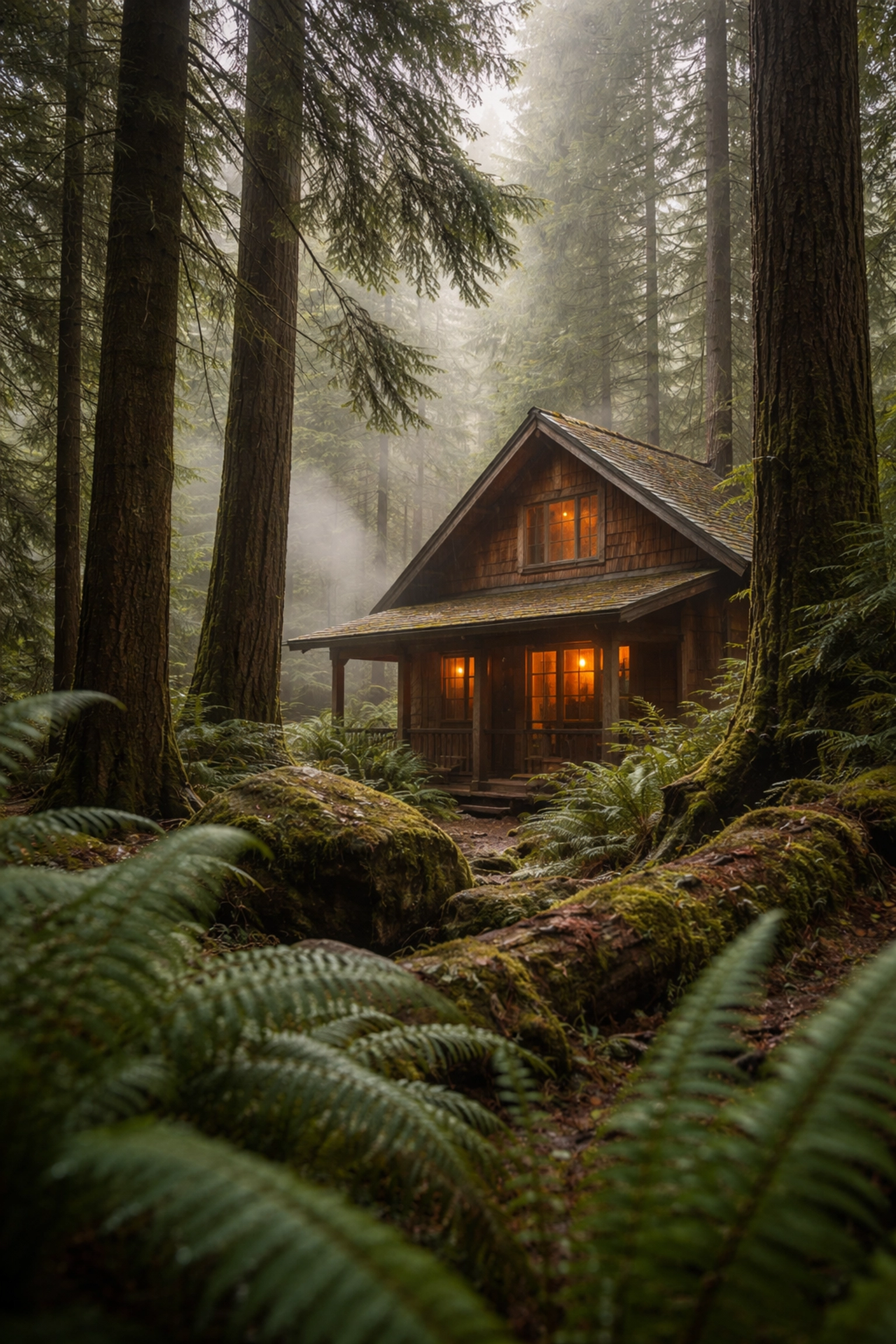
This is why a custom vacation home remodel in Jefferson or Clallam County requires more than a standard construction approach. It requires someone who understands the specific pressures a wooded environment places on a structure.
The Craftsman's Pace: What It Actually Means
Let's be clear about what we mean by "craftsman's pace."
We don't mean delays. We don't mean disorganization. We don't mean a project that drags on without clear communication or progress.
We mean deliberate sequencing. Proper dry times. Material acclimation. Moisture testing before closing up walls. Flashing installed correctly: not just quickly.
Here's what that looks like in practice:
We wait for materials to acclimate. Wood products need time to adjust to the humidity levels of your specific site. Rush this step, and you get warping, cupping, and gaps that appear months after we're gone.
We test moisture levels obsessively. Before we insulate, before we hang drywall, before we install flooring: we verify that moisture content is where it needs to be. Every time.
We build in proper drying sequences. Concrete needs to cure. Sealants need to set. Finishes need to off-gas. Each step has a timeline that can't be compressed without compromising the result.
We install moisture barriers correctly. This isn't glamorous work. But improperly overlapped housewrap or skipped flashing details are the reason so many forest homes develop problems within five years.
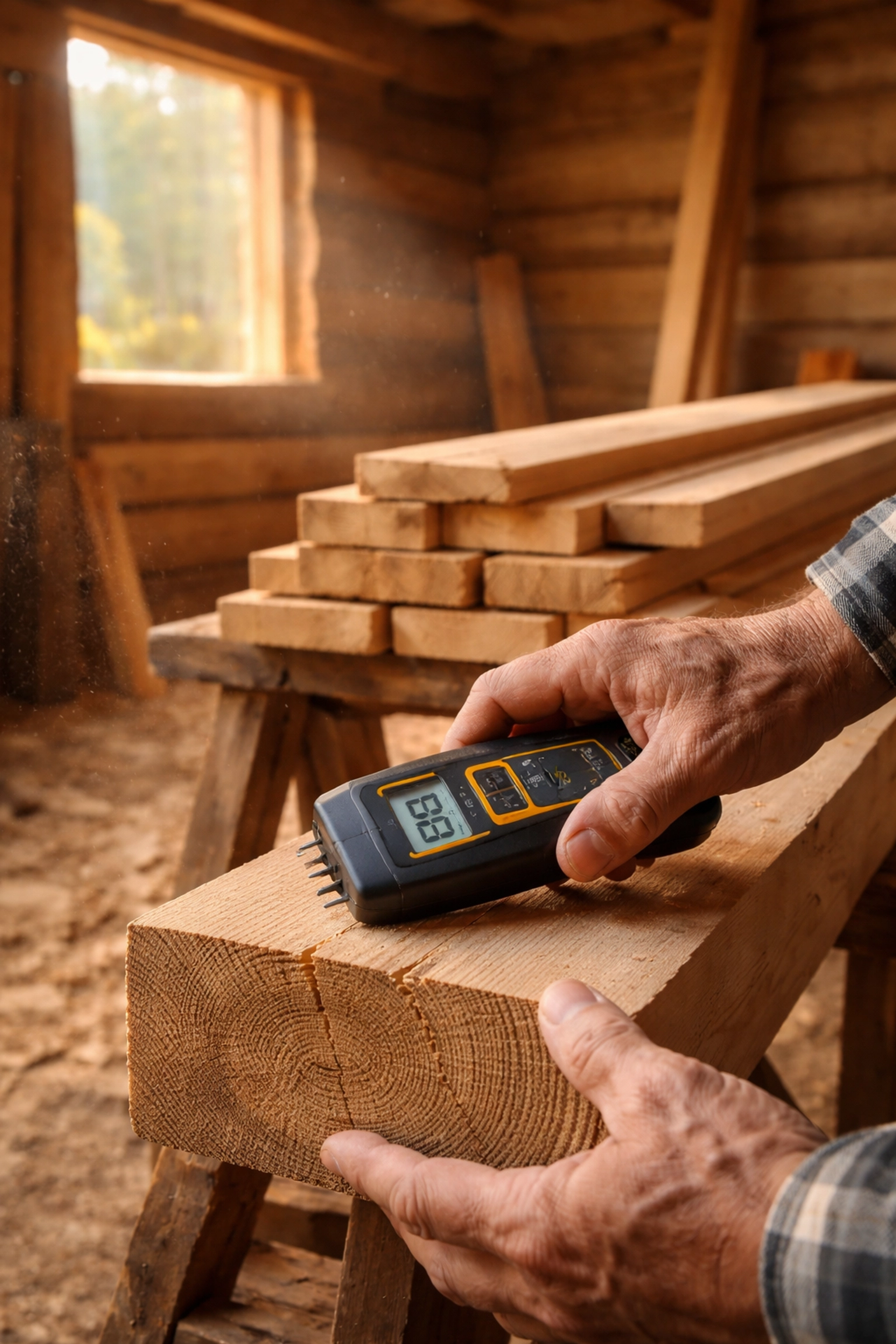
A craftsman's pace protects your investment. It's the difference between a retreat that serves your family for decades and one that becomes a maintenance headache within a few seasons.
The Logistical Reality of Forest Sites
Beyond moisture concerns, wooded properties present logistical challenges that affect how we plan and execute every project.
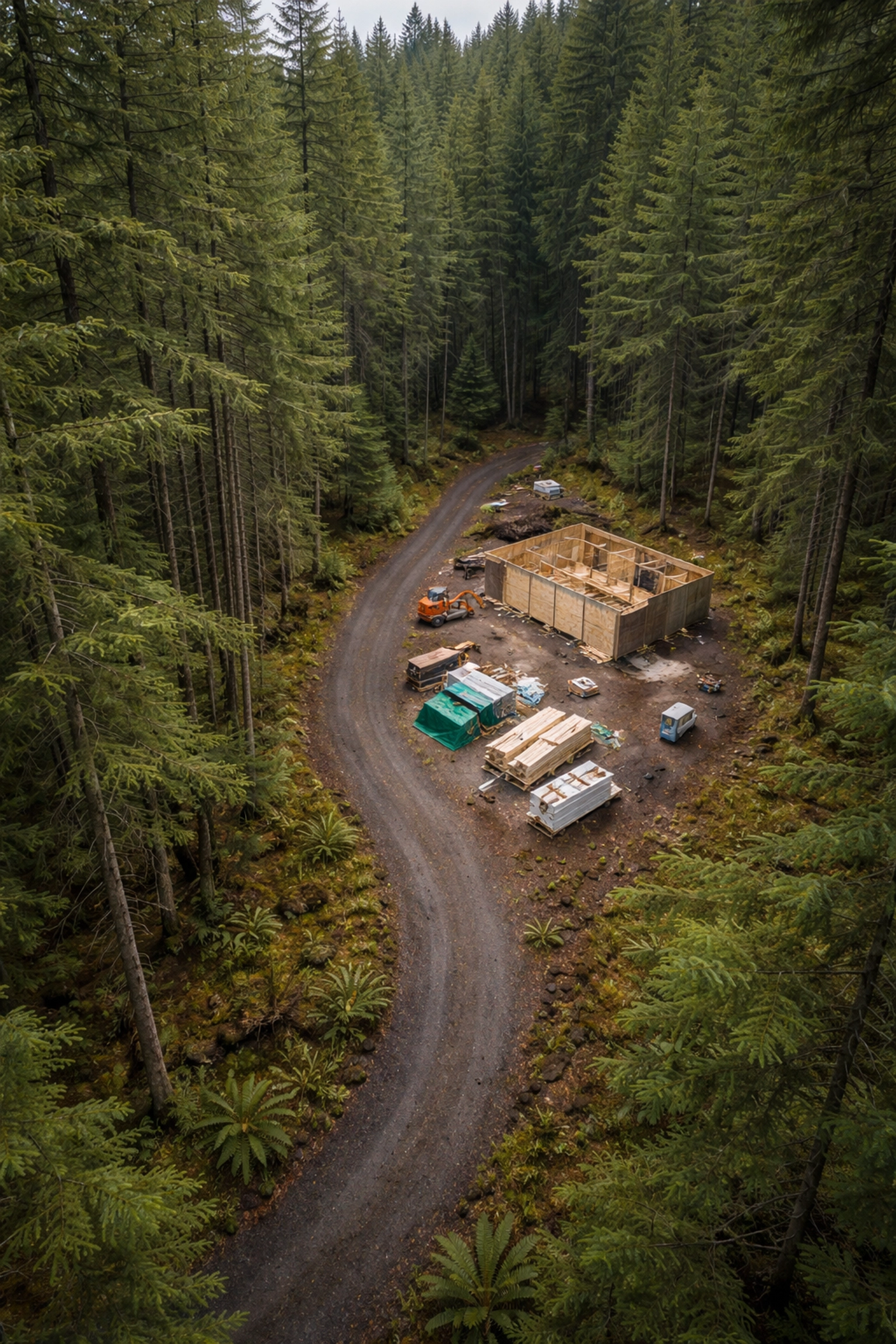
Access limitations. Many forest homes sit at the end of long, narrow driveways. Some are only accessible during dry months without damaging the road. Material deliveries, equipment placement, and crew parking all require careful coordination.
Environmental protection. We work in some of the most beautiful landscapes in the Pacific Northwest. That means protecting root systems, minimizing soil compaction, managing runoff, and leaving the site better than we found it.
Limited staging areas. A suburban lot offers space for material storage, dumpsters, and work zones. A forested site often doesn't. Every delivery needs to be timed correctly. Every material needs to be stored properly to avoid moisture damage before installation.
Utility considerations. Power, water, and septic systems in rural wooded areas often require additional planning. Upgrades may need permits and inspections that add time to the project timeline.
None of these challenges is insurmountable. But they require experience, foresight, and honest communication about realistic timelines.
Moisture-Resistant Home Construction: The Non-Negotiables
When we take on a luxury cabin remodel in Washington's forested areas, certain elements are non-negotiable. These aren't upgrades or add-ons. They're baseline requirements for building something durable.
Proper roof overhangs. Generous overhangs protect siding, windows, and foundations from the constant drip of moisture through the canopy. We don't minimize overhangs to save money. We size them for the environment.
Ventilation strategies. Attics, crawl spaces, and wall assemblies need to breathe. Trapped moisture is the enemy. Every detail of our builds considers airflow and drying potential.
Material selection. Not every product marketed as "moisture resistant" performs equally in a forest environment. We specify materials based on real-world performance in the specific conditions of the Olympic Peninsula, not manufacturer claims.
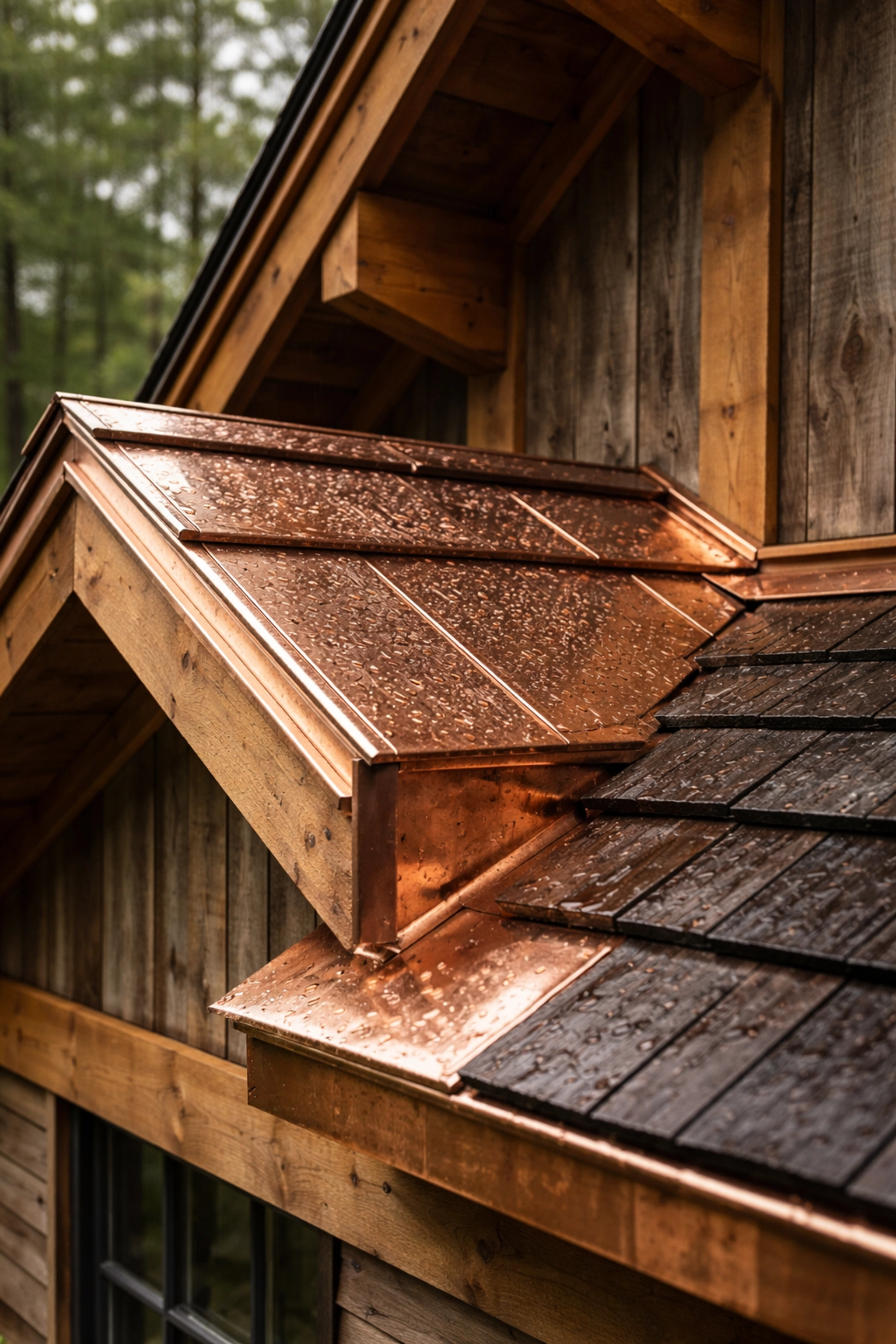
Flashing and waterproofing details. Windows, doors, deck ledgers, roof penetrations: these are the failure points. We install primary and secondary protection at every vulnerable location. Because water finds a way, and our job is to make sure it finds the right way: out.
Gutter and drainage systems. Oversized gutters with leaf guards, proper downspout placement, and grading that moves water away from the foundation. In the forest, water management isn't optional.
Why Rushed Timelines Create Future Failures
We've seen the results of rushed work on forest properties. It's often why homeowners call us in the first place.
The previous contractor promised a fast turnaround. They delivered on that promise. And within three years, the homeowner is dealing with soft spots in the subfloor, musty smells in the walls, or deck boards that have already started to rot.
Speed isn't a feature when you're building in the woods. It's a liability.
Here's the reality: moisture problems don't announce themselves immediately. They develop slowly, hidden behind finishes, under insulation, inside wall cavities. By the time you notice them, the damage is extensive, and the repair costs are high.
A deliberate timeline: one that allows for proper preparation, installation, and verification, prevents these failures before they start.
The Right Fit
We don't take every project that comes our way. We work with homeowners who understand that quality takes time. Homeowners who value craftsmanship over speed. Homeowners who see their forest retreat as a long-term investment, not a quick flip.
If you're looking for the cheapest bid or the fastest completion date, we're not the right fit. We're clear about that from the first conversation.
But if you want a custom vacation home remodel executed with intention, built to withstand the specific demands of your wooded property, and backed by a team that's done this work for years across Jefferson and Clallam Counties: that's what we do.
Building for the Next Fifty Years
Your forest home sits in one of the most beautiful environments on earth. The trees, the quiet, the filtered light through the canopy: that's why you bought the property. That's why you're investing in it.
Our job is to make sure the structure matches the setting. Durable. Thoughtful. Built at a pace that honors both the craft and the environment.
The forest doesn't rush. And when it comes to protecting your retreat for the next fifty years, neither do we.
Ready to discuss your wooded property project? Reach out to Harbor Light Craftsmen to start the conversation.


Comments