The "Dry House": Approach: Moisture Control Upgrades That Protect Peninsula Homes
- Michael Barsos

- Jan 25
- 5 min read

We don't patch moisture problems; we eliminate them.
The "Dry House" approach isn't about quick fixes or surface treatments. It's about understanding how water moves through Peninsula homes, and building systems that stop it before damage begins.
Most contractors treat moisture like a maintenance issue. Replace rotted trim. Paint over water stains. Install a dehumidifier. Done.
We treat moisture like the enemy it is.
Why Peninsula Homes Face a Perfect Storm
Jefferson and Clallam County homes deal with conditions that destroy lesser construction. Salt air that corrodes. Wind-driven rain that penetrates. Ground moisture that rises. Temperature swings that create condensation cycles.
Port Townsend's older homes weren't built for this. Original builders understood local timber and craftsmanship, but not modern moisture science. Chimacum properties sit in microclimates where fog lingers and drainage struggles. Sequim homes face relentless wind that drives water into places it shouldn't go.
The result: homes that look solid but slowly rot from the inside out.
We've seen beautiful Victorian exteriors hiding compromised floor joists. Expensive kitchen remodels ruined by crawlspace moisture. Luxury finishes that bubble and peel because the underlying structure never got properly protected.
The "Dry House" approach changes this. It treats your home as a complete moisture management system: not a collection of separate problems.
The Three Pillars of Moisture Protection
Pillar One: Exterior Defense
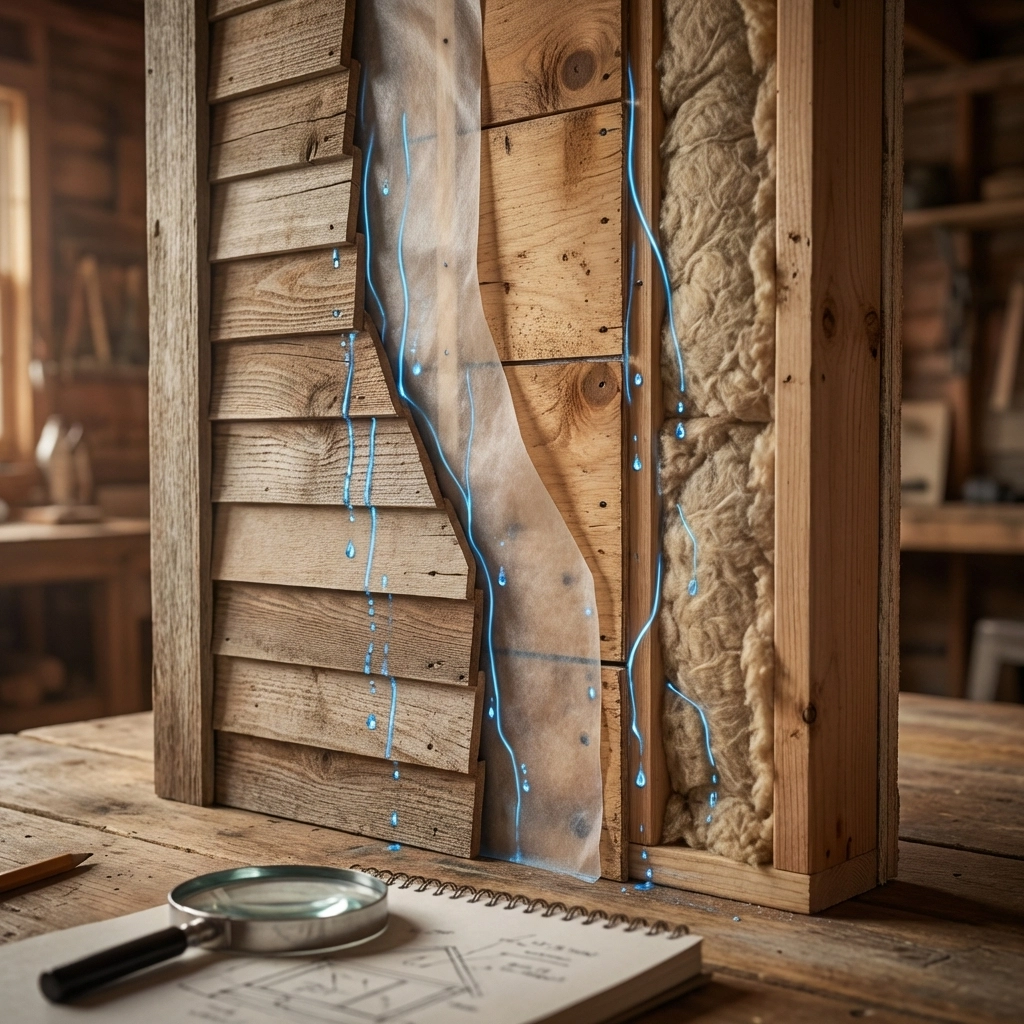
Water that never reaches your walls can never damage them.
We start outside. Grading that directs runoff away from foundations: not toward them. Gutters sized for Peninsula storms, not California drizzle. Downspouts that carry water far enough to matter.
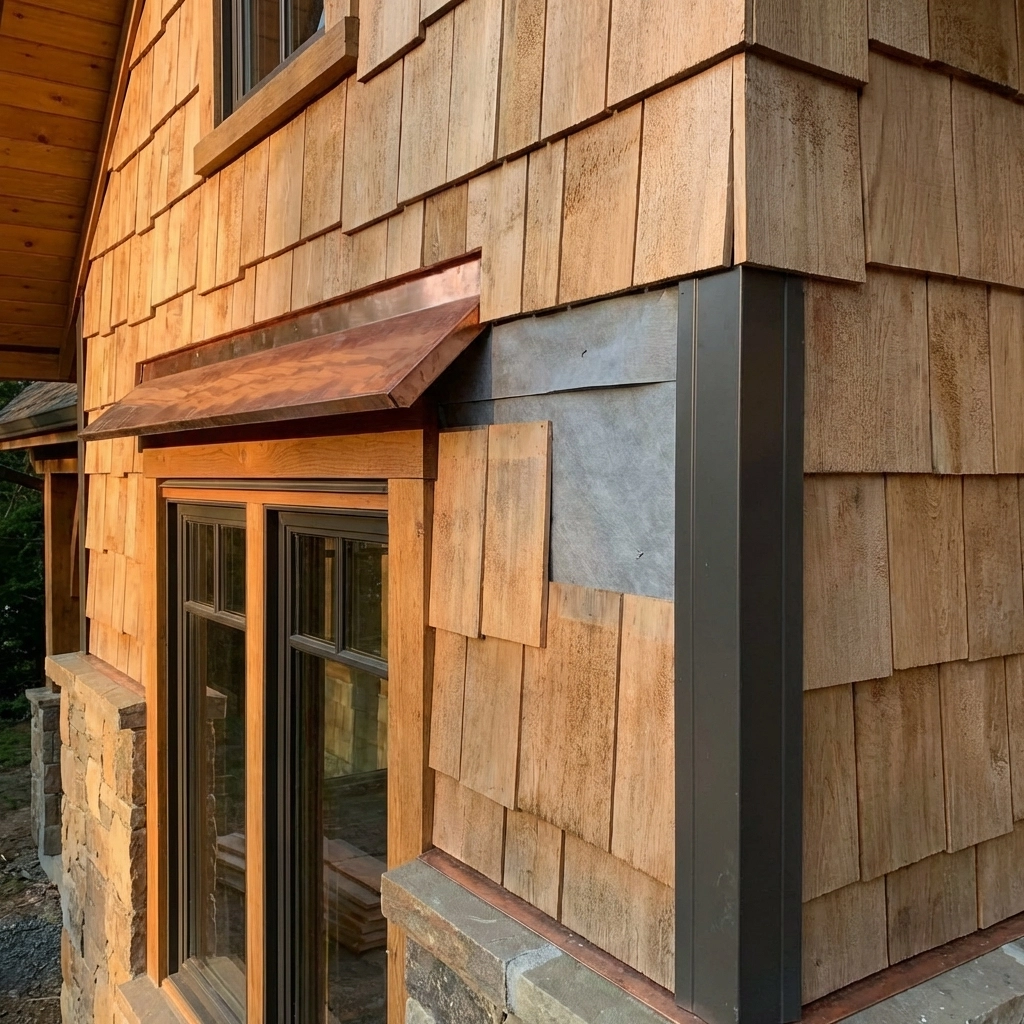
The real work happens in the details. Weather barriers that create continuous protection. Flashing that accounts for wind-driven rain. Window installations that shed water instead of collecting it.
Most contractors install these components as separate items. We install them as layers in a complete water management system.
Pillar Two: Foundation Control
Peninsula homes face moisture from below and above. Clay soils that hold water. High water tables. Ground moisture that rises through concrete and stone.
We create barriers at every potential entry point. Damp-proofing applied to all below-grade walls: not just the obvious ones. Drainage planes that channel water away from foundations before it becomes a problem. Capillary breaks between foundations and wood framing.
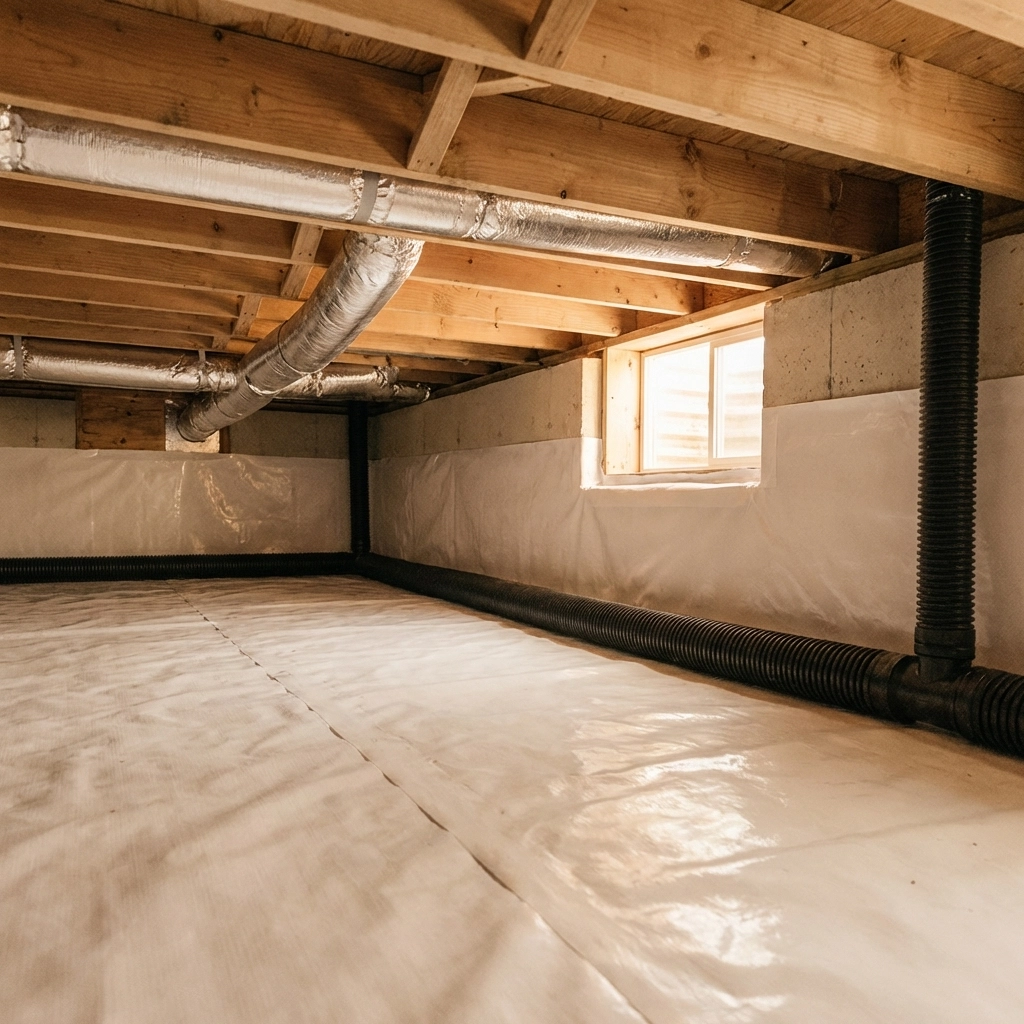
The crawlspace gets special attention. Vapor barriers that actually work: 6-mil polyethylene with properly sealed seams. Ventilation designed for our climate, not generic building codes. Drainage that prevents standing water during wet seasons.
Pillar Three: Interior Climate Control
Air carries moisture. Control the air, control the moisture.
We identify and seal every unintended air path. Holes around pipes and wires. Gaps between the subfloor and walls. Cracks where different building materials meet. These openings move more moisture than most homeowners realize.
Ventilation becomes strategic. Exhaust fans sized for actual bathroom and kitchen loads: not minimum code requirements. Fresh air systems that prevent negative pressure. Circulation patterns that prevent warm, humid air from finding cold surfaces.
Specific Upgrades That Make the Difference
Foundation and Crawlspace Improvements
Encapsulation transforms Peninsula crawlspaces from moisture sources into controlled environments. We seal the entire space: walls, floors, everything. Install proper drainage. Add conditioned air. Create a space that stays dry year-round.
French drains aren't trenches filled with gravel. They're engineered systems with proper slopes, quality materials, and outlets that actually work. We size them for Peninsula weather, not average rainfall statistics.
Exterior Shell Upgrades
Window replacement goes beyond energy efficiency. We install windows that handle wind-driven rain. Flashing systems that shed water. Sill designs that prevent collection. Trim details that channel moisture away from vulnerable areas.
Siding and roof work includes complete weather barriers. Not just building paper: engineered systems that stop air movement and moisture penetration. Materials chosen for salt air resistance and thermal cycling.
Interior Systems
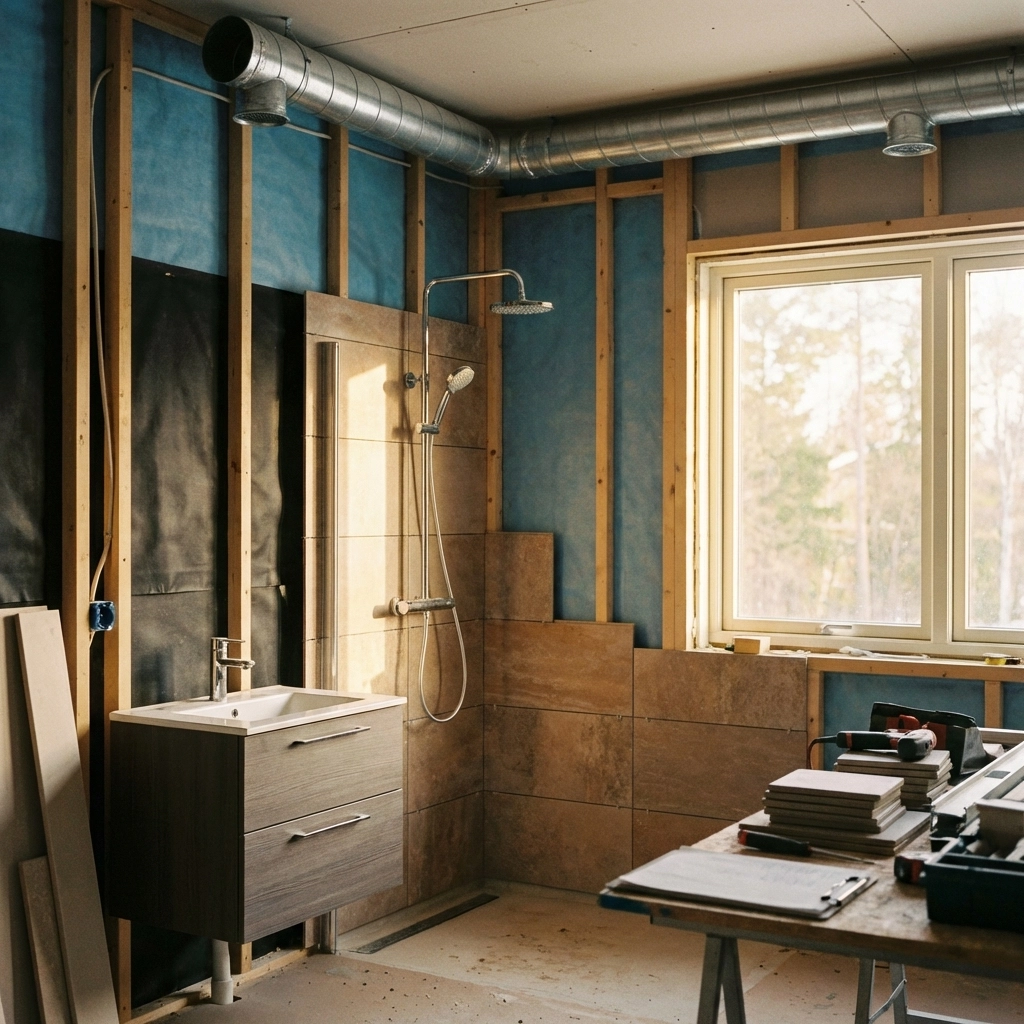
Bathroom and kitchen ventilation becomes part of whole-house moisture management. Fans that actually remove moisture. Ductwork that carries it outside: not into attics or walls. Controls that run systems long enough to matter.
Insulation upgrades include vapor control strategies. Materials and installation methods that prevent condensation inside wall and roof assemblies. Thermal bridging is eliminated to prevent cold spots where moisture condenses.
The Timeline That Protects Your Investment
Moisture control work can't be rushed. Proper sequencing matters. Foundation improvements before finishing work. Shell upgrades before interior systems. Each layer is properly installed before the next begins.
We schedule projects for Peninsula weather patterns. Foundation work during drier months. Interior projects when we can control conditions. Material deliveries are timed to prevent moisture exposure during storage.
Quality control happens at each phase. Moisture testing before enclosure. Pressure testing after air sealing. Documentation that proves systems work as designed.
Shortcuts in moisture control become expensive problems later. Vapor barriers were installed poorly. Drainage systems that fail during the first big storm. Air sealing that leaves critical gaps.
We build these systems once: correctly.
When Your Home Needs the Dry House Approach
Obvious signs: musty smells that won't go away. Condensation on windows during the winter months. Wood trim that feels soft or shows water stains. Basement or crawlspace humidity problems.
Subtle indicators: higher-than-expected heating bills. Paint that peels prematurely. Hardwood floors that cup or gap seasonally. Metal fixtures that corrode faster than they should.
But the best time for moisture control upgrades isn't when problems appear. It's during major renovation projects: when walls are open, and systems are accessible.
Kitchen remodels become opportunities for complete moisture management. Bathroom renovations include proper ventilation and waterproofing. Whole-house projects integrate all systems into complete protection.
Beyond Problem-Solving
The "Dry House" approach creates homes that age gracefully. Wood that stays stable. Metal that resists corrosion. Finishes that maintain their appearance. Systems that work reliably for decades.
Peninsula homes built with proper moisture control require less maintenance. Experience fewer emergency repairs. Hold their value better. Feel more comfortable year-round.
We design these improvements for permanent residents who plan to stay. Upgrades that make daily life better: not just prevent problems. Investments that compound over time.
The Harbor Light Difference
We've spent years understanding how moisture moves through Peninsula homes. Every microclimate. Every soil condition. Every weather pattern tests construction.
Our moisture control systems reflect this knowledge. Solutions designed for Port Townsend fog and Sequim wind. Materials chosen for salt air and temperature swings. Installation methods proven in Peninsula conditions.
We don't follow generic building science. We practice Peninsula building science.
The "Dry House" approach isn't about following checklists. It's about understanding your specific home, your specific site, and your specific goals. Then, building systems that deliver reliable protection for decades.
Because the best moisture control system is the one that works so well, you forget it's there.
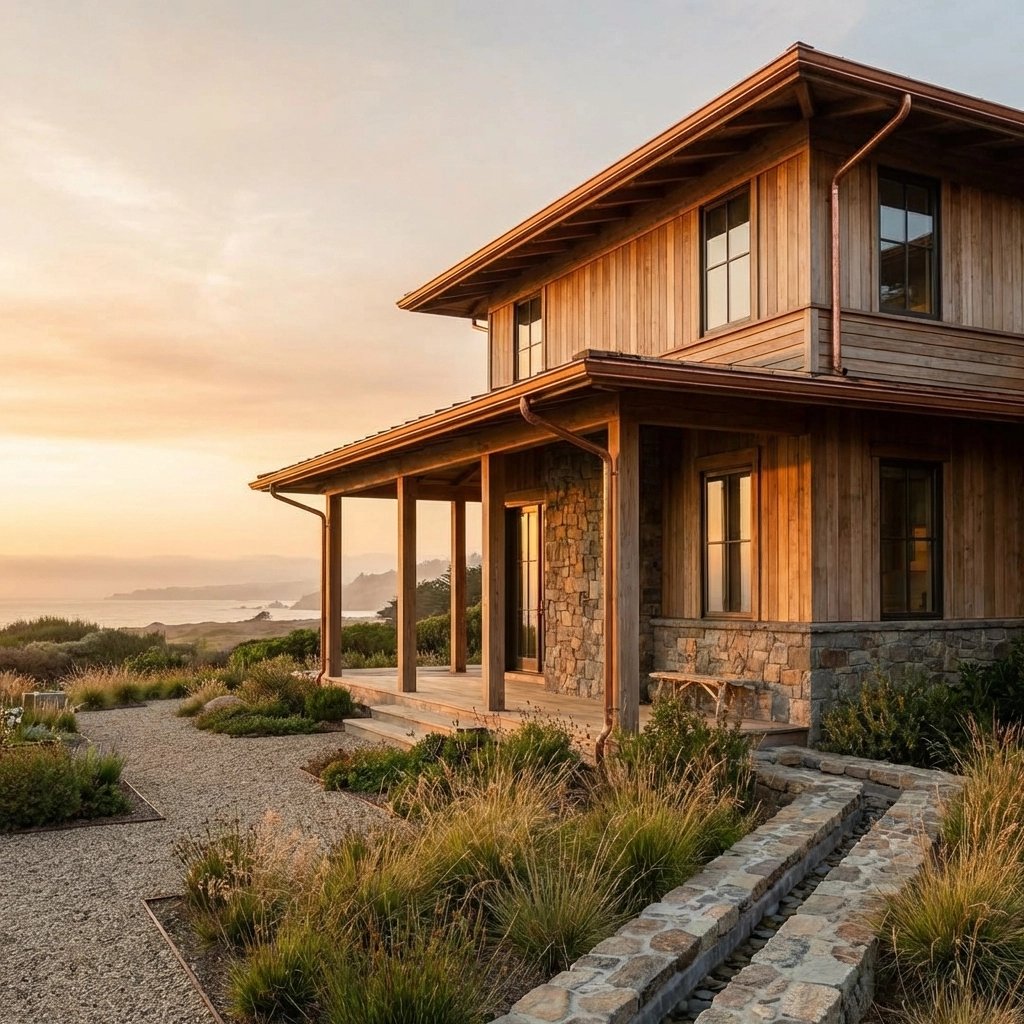
Your home should protect you from Peninsula weather, not struggle against it. The "Dry House" approach makes this possible. Through intentional design, quality materials, and installation methods that account for real-world conditions.
We build homes that stay dry. That age gracefully. Those that require less maintenance and provide more comfort.
Peninsula homes built right the first time.


Comments